FACULTY OF ALLIED HEALTH & BIOLOGICAL SCIENCES
Bachelors of radiography and imaging technology
Department
Radiological Sciences and Medical Imaging Technology
Level
Undergraduate
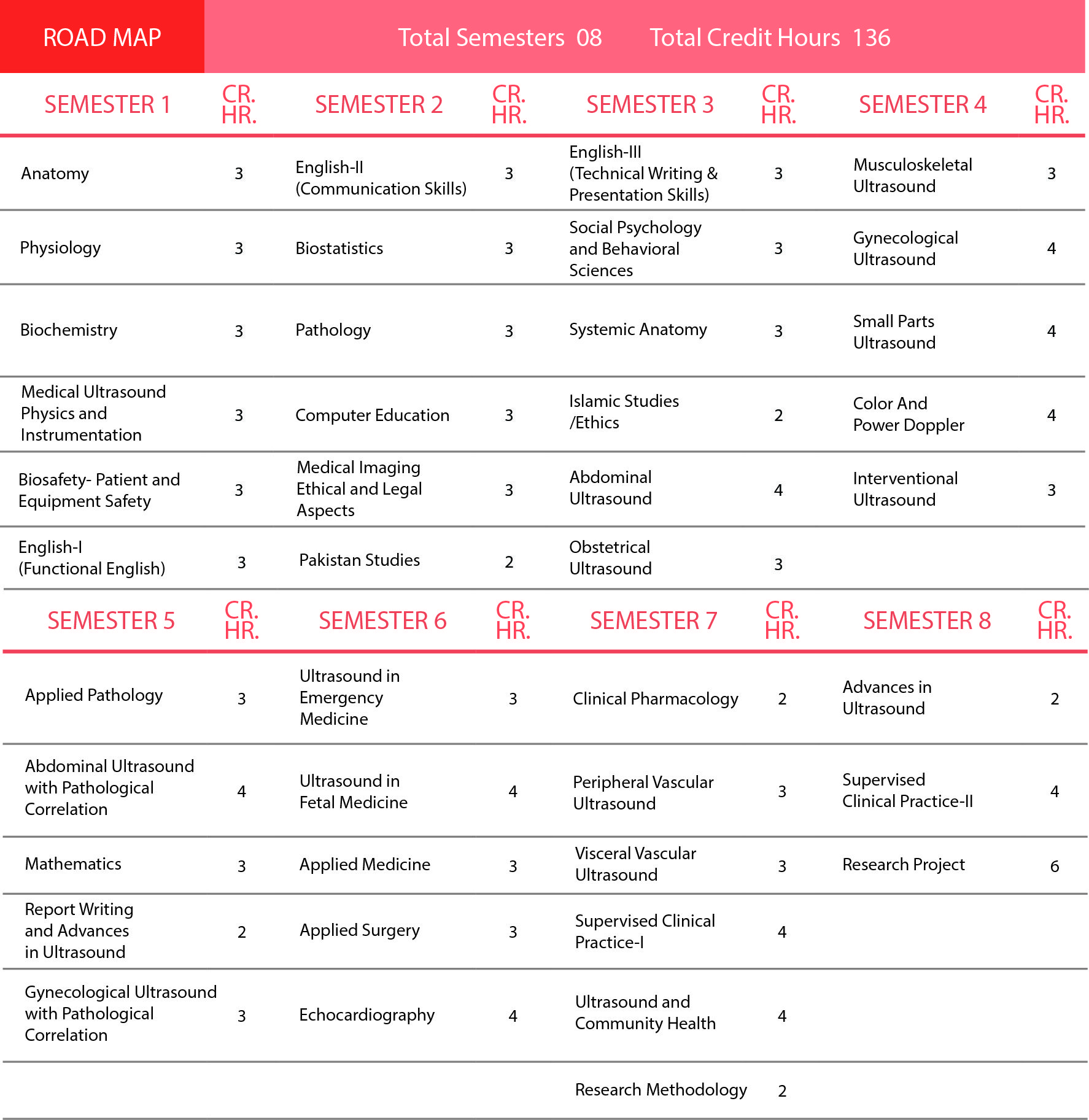
Semesters
08
Credit
136
INTRODUCTION
The degree was introduced for the first time in Pakistan keeping in view the demand of trained and knowledgeable imaging personnel in Radiology departments of healthcare facilities across Pakistan as well as around the globe. The curriculum encompasses all the basic modalities of Radiology as well as the rapid advancements in the field of Medical Imaging Technology such as Radiography, CT, MRI and Ultrasound etc.
- Program Duration
- Entry Requirements
Program Duration: 4 Year
Timing: Morning (Monday-Friday)
Location: 6.7 Km Japan Road, Sihala, Islamabad.
Recognized By: Higher Education Commission
Entry Requirements:
12 Years of Education, HSSC, F.Sc (Pre-Medical) / A-Level or Equivalent with Minimum 60% marks.
Qualifying the interview successfully.
Entry Test: Ibadat International University Entry Test (if).
CAREER PROSPECTUS
This professional program is for the students interested to pursue their careers in the field of Radiological Technology including Ultrasound and it serves to provide them the knowledge of latest techniques in this -field. After completing this program, they can go on to do higher degrees like MS in medical imaging technology, MS in diagnostic ultrasound or can compete for the jobs in the Radiology department as Radiological Technologist as per job description approved by health authorities later on. The students are also eligible to appear in Board exams in medical Imaging conducted by the international organizations.
VISION & MISSION
Department of Radiological Sciences and Medical Imaging Technology (DRS&MIT) at the Ibadat International University Islamabad is one of the leading departments in the world providing diverse specialties in the medical imaging sciences. This helps our students to combat with the modern challenges brought about by the extensive use of computer technology and rapid development in diagnostic imaging modalities. DRS&MIT seeks to develop graduates, who will be able to provide timely, cost-efficient, and high-quality medical imaging and image guided therapy services to a diverse patient population countrywide and abroad. The department is striving at its best to educate its students about the importance of critical function that medical imaging and Image guided therapy serve in improving the outcomes and advancing the care of patients. DRS&MIT equips its students with a high degree of information literacy, including the ability to seek and use information resources for problem solving, critical thinking and professional values, such as those outlined in the American Society of Radiologists and American Society of Ultrasound in Medicine. DRS&MIT intends to continue making significant contributions in the discovery of innovative imaging technologies, and image-guided therapy in order to make a difference in the enhancement of healthcare delivery system. In addition, we at DRS&MIT prepare our students for international certification examination and qualify for regional and abroad licensure.
PROGRAM OBJECTIVES
The aim of this program is to equip the students with relevant professional knowledge, skills, techniques and ethical values to enable them to apply their acquired expertise at the level between the doctors and the patient for efficient health service delivery. This program produces the graduates having research knowledge and skills. On the bases of knowledge and skills they will be able to do the evidence-based practice.
PROGRAM LEARNING OUTCOMES
Upon completion of the BS in Radiography and Imaging Technology program, graduates will be able to:
- Operate a range of medical imaging equipment—including X-ray, CT, MRI, and ultrasound—by adjusting technical parameters, positioning patients accurately, and acquiring diagnostic-quality images.
- Apply radiation safety principles, utilizing shielding, exposure optimization, and protective protocols to minimize risks to patients, staff, and self.
- Demonstrate effective communication with patients and healthcare teams, showing empathy, professionalism, and cultural sensitivity while ensuring patient comfort and safety.
- Integrate comprehensive knowledge of human anatomy, physiology, and pathology to optimize imaging protocols and assist in recognizing abnormal findings.
- Produce and evaluate high-quality diagnostic images through proper patient positioning, exposure selection, and adherence to quality assurance measures.
- Exhibit ethical conduct and professional integrity, respecting patient rights, confidentiality, and legal responsibilities in all imaging activities.
- Analyze and resolve technical and procedural challenges using critical thinking, evidence-based practice, and problem-solving strategies.
- Collaborate effectively with radiologists, physicians, nurses, and other healthcare professionals to ensure accurate image interpretation and timely patient management.
- Adapt to advancements in imaging technologies and emerging modalities such as interventional radiography and nuclear medicine.
- Engage in lifelong learning, research, and continuous professional development to enhance clinical practice and contribute to the advancement of the radiologic sciences.